


Do you sometimes feel like your feet are sitting in a cramped box when you're out on a hike or just going to the store?
It's a feeling many of us get when we wear traditional running or winter boots – the sole presses against our toes, and each step feels like a slight pause in natural movement. Barefoot shoes are meant to break that pattern and let your feet work the way they were designed to.
Imagine walking in a forest grove in Dalarna, leaves crunching underfoot and you hear the ground giving way in a soft, flexible way. A friend who tried our TJÅKKO barefoot shoes said that after just one week she felt improved balance and less pain in her heels, while being able to run further without feeling “fatigue” in her feet.
It's not just for the experienced walker. A child playing on the playground can also benefit from the wide toe box and thin sole, which allows for natural foot development and strengthens muscles at a young age. One mother who switched her children's regular shoes for barefoot shoes noticed that they stopped tripping as often and had better posture when they went to school.
But going barefoot is not a magic button. Here are some concrete steps to make the transition smooth: start with short walks on soft surfaces, gradually increasing the time by 5-10 minutes each day, and let your feet get used to activating the small muscles. Combine with simple foot exercises – rolling a tennis ball under your foot or picking up small objects with your toes.
If you’re planning a longer trek or a weekend in the mountains, consider combining your barefoot shoe choice with sustainable transportation options. An AI-powered EV planner can help you find charging stations along the scenic route, so you can enjoy the ride with minimal impact on both the environment and your feet. Learn more about how to plan a green road trip here.
Finally, try walking barefoot at home first – walk barefoot on the kitchen floor for 10 minutes before putting on your shoes. Feel the difference in how your feet react to different surfaces and then adjust step by step. This way you will build strength, balance and a natural running style that will follow you throughout your life.
TL;DR
Barefoot shoes allow your feet to move naturally, build strength, and reduce pain, but the transition requires patience and the right plan.
Start with short walks on soft ground, increasing by 5–10 minutes daily, try foot exercises such as rolling a tennis ball and picking up objects with your toes for safe, stable balance and freedom.
Benefits of barefoot shoes for everyday use
Do you sometimes feel that your feet feel tired even after a short walk to the grocery store? It's usually just your shoes that are holding them in an unnatural grip, and barefoot shoes can be the simple solution that gives you more energy in everyday life.
When you walk in a thin, flexible sole, every little muscle in your foot gets to work, just like it would if you were walking barefoot in the forest. This means stronger arches, better balance and a reduced risk of common problems like heel spurs or bunions.
But how do you actually notice the difference in your daily life? First of all, it feels like you have more contact with the ground – you hear the crunch of gravel under your feet or the softness of a sidewalk. This sensory feedback helps your brain adjust your posture automatically.
Another advantage is that you often avoid the hard heels that push your toes forward. With a wide toe box, your toes are allowed to spread naturally, which reduces pressure on your joints and can reduce pain in your knees and hips. I have heard many customers say that they notice relief after just a few days.
If you're curious about what a typical day looks like with barefoot shoes, check out this short video that shows both walks in the city and simple home workouts.
As you saw in the video, it's easy to combine them with regular activities – you can walk to the bus, pick up the kids, or just stand in the kitchen and cook dinner without feeling that pressing sensation in your heel.
For those planning longer excursions, there is also a smart connection to sustainable travel. With a planning app that helps you find charging stations for electric cars, you can easily combine environmentally friendly transport with your new barefoot shoes, making your holiday adventure both green and foot-friendly.
And if you're ever thinking about combining your shoes with an active holiday in the Iberian Peninsula, check out Vaga Portugal for inspiring hiking trails that are designed for natural foot movement. While they don't sell shoes, they do give you ideas on where to test them out in truly varied terrain.
Here are some concrete benefits you can count on in your everyday life:
- Strengthens foot and calf muscles
- Improves balance and proprioception
- Reduces the risk of foot ulcers and the like
- Promotes better posture throughout the body
- Gives you more freedom to feel the surface
- Can reduce pain in knees, hips and back
The best part is that you don’t have to buy expensive, specialized models to reap these benefits. A simple model with a thin sole and wide toe box is often enough to start feeling the difference. Try them at home first – walk barefoot on the kitchen floor for ten minutes, then put the shoes on and feel how your feet adapt naturally.
Once you get used to the new feeling, you can start adding short sprints or jumping rope to further strengthen your foot dynamics.
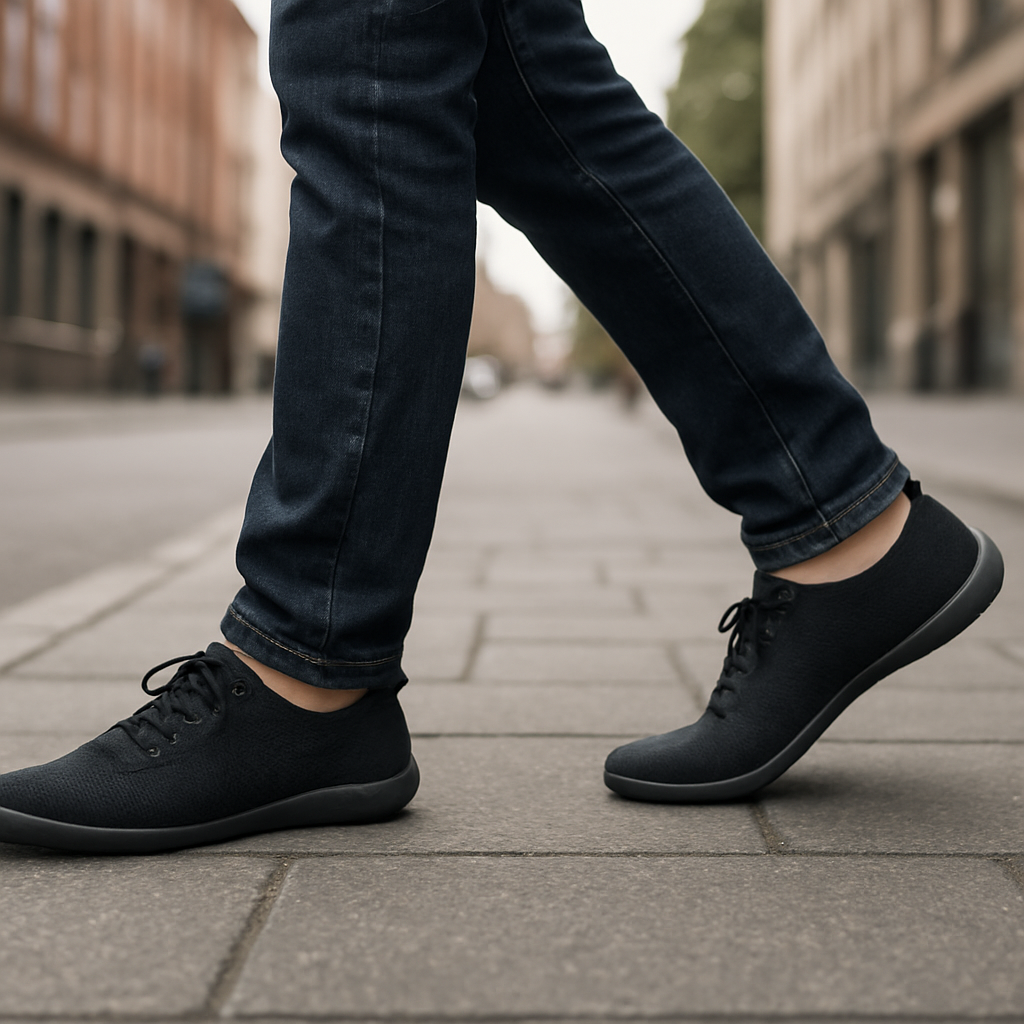
In short, barefoot shoes give you a more natural gait, reduce pain, and strengthen your body from the foot up. So the next time you're out on the town or taking a short walk, try letting your feet breathe – your legs and back will thank you.
How to choose the right barefoot shoes for running
You’ve probably stood at the starting line and felt your feet want to breathe, but at the same time worried that the thin sole would make every step a painful experience. That’s completely normal – the first step is to understand what really matters when choosing barefoot running shoes.
Here is a concrete, step-by-step guide to help you find the model that both feels natural and gives you the confidence you need on asphalt, gravel or running trails.
1. Know your foot type
Before you start browsing the range, take a moment to observe your own feet. Do you have a wide toe box? Do you tend to pronate (roll inward) or supinate (roll outward)? A simple test is to stand on a sheet of paper – do you see clear footprints with your whole toes or just part of your foot? This information controls both the width of the sole and the placement of the support.
If you're unsure, you can also look at how your old running shoes have worn. Worn surfaces on the outside often indicate pronation, while wear on the inside points to supination.
2. Sole thickness and flexibility
Test.se notes that beginners often feel best with a sole of 4-8 mm, while experienced runners can go down to 1-4 mm for maximum ground contact ( test.se – barefoot shoes ). Thinner soles provide better proprioception, but they still need to be flexible from heel to toe so you can roll the shoe into your pocket when you're done with your workout.
Do a simple double-click test: hold the shoe in your hand and bend it. Does it feel stiff like a plastic plate, or does it follow your hand like a soft towel? Choose a model that bends without breaking.
3. Drop value – how high is the heel?
A zero drop or a maximum of 3-4 mm is ideal for barefoot running, as it keeps the heel level with the forefoot and encourages a forefoot or midfoot landing. This reduces the impact on the knee and hip, which according to test.se can lead to fewer overuse injuries.
If you are used to traditional running shoes with higher heels, start with a model that has a small drop and gradually increase as your body adapts.
4. Toe box width and material
Barefoot shoes should have a spacious toe box so that your toes can spread naturally. A rule of thumb is that you should have about 1.5 cm of space between your toes and the edge of the shoe. The material should be breathable yet durable – mesh overlays combined with a soft synthetic leather are a common and proven choice.
As an example, we recommend TJÅKKO Ljusnan – the flexible barefoot shoe . It has a wide toe box, a thin but durable rubber sole and is made of soft mesh that allows your feet to sweat without getting wet.
5. Grip and protection for varied surfaces
If you plan on running on both asphalt and trails, look for a sole with multidirectional traction. There should be a subtle pattern that provides traction on loose gravel but doesn't feel like a rough trail shoe on city streets.
Some models have extra protection on the toes – a thin reinforcement that prevents sharp rocks from penetrating. For beginners, this is a smart safety feature.
6. Try and test – no theory is enough
The best way to know if a shoe fits is to actually run in it. Go into a store, take your shoes off, and walk around on different surfaces: tile, carpet, gravel. Feel how your foot moves, if your toes have room, and if the sole feels soft enough but still responsive.
If you're shopping online, double-check the return policy and make sure you can try it out for 14-30 days. Many runners notice small adjustments after a few runs – so give yourself room to adjust.
7. Build up your training volume gradually
Once you've found your new barefoot shoes, start with short intervals – 5-10 minutes on soft ground, then 5 minutes on asphalt. Increase by 5-10 minutes each week. If you feel any soreness in the forefoot or heel, pause and recover.
Remember that the body needs time to strengthen the small foot muscles. A common pitfall is going too quickly from walking to long runs – this can lead to heel pain or plantar fasciitis.
8. Check the fit regularly
Feet can change with the seasons and fitness level. A model that fit perfectly one year may feel too tight the next. Do a quick fit check every season: stand on your toes, walk on your heels and feel for pressure points.
In short, choosing the right barefoot running shoes is all about combining your individual foot needs with a model that has the right sole, drop, toe box, and grip. Follow the steps above, test it out for yourself, and let your feet lead the way – and your running will be both natural and gentle.
Barefoot Shoes vs. Traditional Shoes: Comparison Chart
You've probably wondered what actually sets a barefoot shoe apart from that regular running or casual shoe you've always bought. Does it seem like a big deal or just a small nuance? Let's get straight to the point and break down the differences in a simple table.
Why a comparison table?
We all like quick answers. A table shows you at a glance how the two shoe types perform on important factors – and you can then decide what matters most to you. Plus, it makes it easier to explain to someone else, like a friend who’s thinking about trying barefoot shoes.
Here's an overview that covers everything from construction to how they feel on different surfaces. We've also included some concrete examples so you can imagine what it looks like in real life.
| Property | Barefoot shoes | Traditional shoes |
|---|---|---|
| Drop (heel cushioning) | 0–4 mm, often zero drop, allows the foot to land evenly. | 8–12 mm, higher heel cushioning that pushes the foot forward. |
| Toe box | Wide, gives your toes room to spread naturally. | Narrow, can squeeze the toes and reduce mobility. |
| Sole flexibility | Very flexible throughout the foot, follows the contours of the ground. | Rigid, often only flexible in the front. |
| Weight | Lightweight – often under 300 g per shoe. | Heavier, sometimes 500g+ due to cushioning and material. |
| Grip on uneven surfaces | Multidirectional pattern, yet thin for feel. | Larger pattern, but can feel “rubbery” on smooth surfaces. |
Do you see the differences? It's not just a design issue – it's a completely different walking experience. Now let's go through some practical scenarios.
Examples from everyday life
Anna uses our Be Lenka | Glam | Barefoot Chelsea Boots for walks around town. She notices that her feet don't swell after an hour of walking, and that she doesn't have that "cramped box" that her old sneakers had.
Johan, who commutes by bike, prefers a traditional athletic shoe for the extra cushioning when he ramps up to the curb. But when he goes for a short run on the dirt road, he switches to barefoot shoes to feel the ground better and reduce the strain on his knees.
One of our younger customers, 8-year-old Emil, has just switched to barefoot boots for school. His teacher reported that he now jumps further and has better balance on the playground – something that is often lacking when children wear stiffer shoes.
Practical tips for choosing the right one
1️⃣ Test the width: stand on your toes in the shoe and feel for at least 1 cm of space around each toe. If it feels tight, move on.
2️⃣ Feel for flex: bend the sole with your hand. A good barefoot shoe gives way without cracking.
3️⃣ Test on different surfaces: take a few steps on grass, then on asphalt, then on a soft carpet. Your body will quickly know if the support is enough.
4️⃣ Build up the time gradually: start with 10-15 minutes at home, increase by 5-10 minutes each day until you can go for a full walk without discomfort.
5️⃣ Consider the weather: for cold days, choose a winter-lined model, but keep the zero-drop principle. Our winter collections provide protection without compromising movement.
What do the experts say?
Research shows that a thin, flexible sole increases proprioception—the internal sense of where you are in space. That means better balance and a reduced risk of sprains, especially on slippery or uneven surfaces. It's the same mechanics that help children develop stronger feet when they play barefoot.
If you're still unsure, try a short trial with a money-back guarantee. Many of our customers have switched completely after just a week of positive feedback.
Do you want to know more?
For a deeper look at how barefoot shoes can improve your running technique, check out our guide on the blog. And if you're curious about how you can create a sustainable home around your new shoes, read more about home trends - it's actually more connected than you think.
use of barefoot shoes in outdoor activities
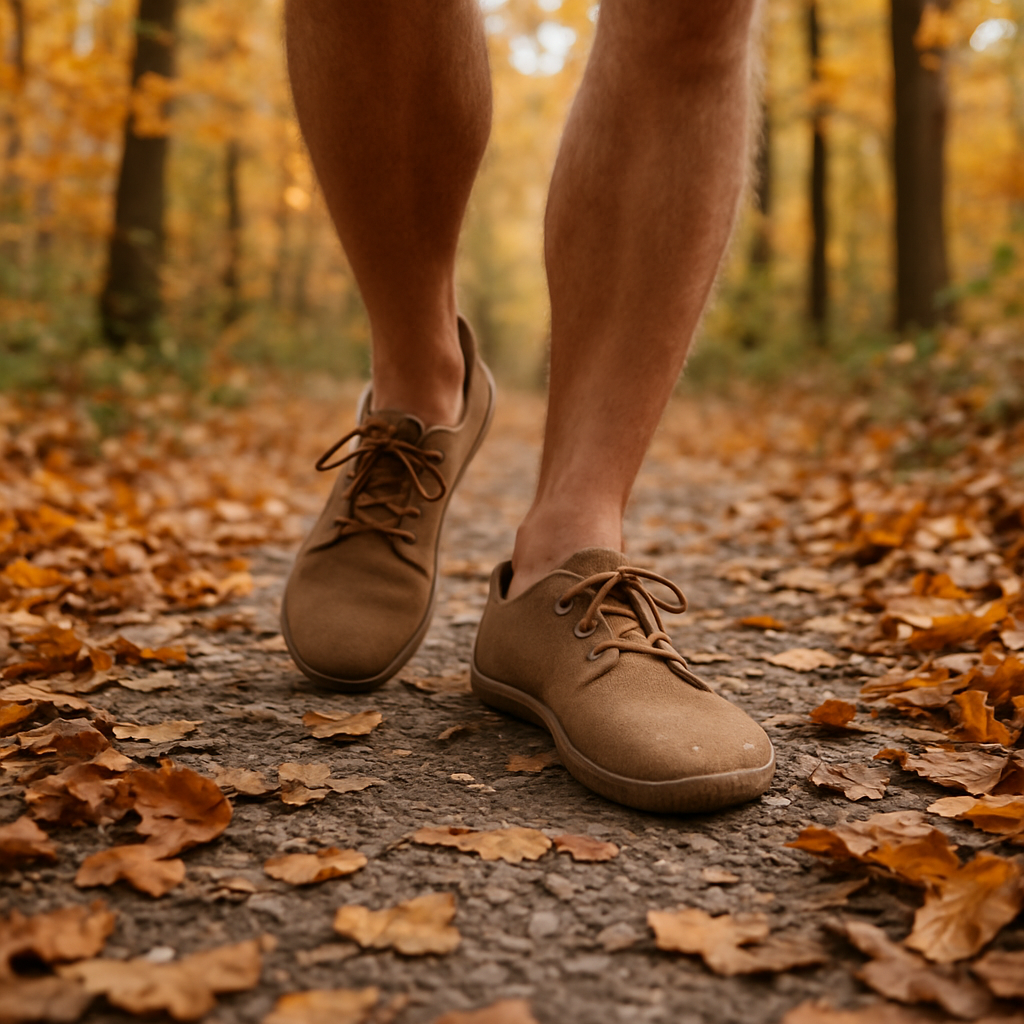
You've probably stood on a rocky path in Dalarna and felt how every little bump speaks to your feet. It's that direct feedback that makes barefoot shoes so magical in the outdoors.
But how do you take that feeling from a short walk to a full day in the mountains without ending up in pain or blisters? Let's go through it step by step – with concrete examples, practical tips and a dose of scientific background.
1. Choose the right model for the terrain
Not all barefoot shoes are made for the same terrain. A lightweight model with a thin sole is perfect for soft grass or sand, while a version with a more robust, non-slip sole will handle rocks and muddy trails better. Think about what you plan to encounter: if you know you’ll be crossing a wet stream, look for a waterproof construction with a grip pattern similar to the Groundie GX1 Multi-Terrain sole.
According to the Groundies experts, a good barefoot hiking shoe only weighs around 300g per shoe, making it one of the lightest options on the market.
2. Customize your first adventure
Start with a shorter route of 3-5 km. This will allow you to feel how your foot muscles react without overexerting them. If you notice soreness in the forefoot, reduce the distance and switch to a softer surface before increasing.
Here is a simple checklist for your first hike:
- Choose a trail with mostly soft soil or leaves.
- Pack thinner socks made of merino wool or a synthetic blend to keep your feet dry.
- Bring a small foot care brush to quickly remove dirt after your workout.
And remember: feet swell during the day, so try on the shoes in the afternoon when they are at their natural size.
3. Build strength and endurance
Barefoot shoes activate more small muscles than traditional hiking shoes. This means you may need extra energy at first. Plan in short “power intervals”: walk for 5 minutes on flat ground, then 2 minutes on steep sections, and repeat. After a few sessions, you’ll notice that you can maintain a more consistent pace without feeling tired.
Another exercise is to do “toe picking” while walking – picking up a small stick or leaf with your toes. This trains your grip and improves your balance in real time.
4. Manage weather and humidity
Rain or snow changes the feel of the ground. Choose a barefoot shoe with a waterproof upper and a non-slip sole. On icy trails, you can add a thin rubber layer or an anti-slip insert that can be attached under the sole.
If you are unsure about the weather, pack a lightweight, breathable rain jacket and an extra pair of socks. An extra pair of socks is often the difference between a comfortable day and a day with wet, cold feet.
5. Care and maintenance for longer life
After each outing, brush off dirt and rinse your shoes with lukewarm water. Let them air dry in a shaded, ventilated area – avoid direct sunlight which can make the material brittle.
For extra grip, you can apply a silicone-based impregnation spray, but test on a small area first to ensure the sole retains its flexibility.
A well-maintained barefoot shoe can last between 1,000 and 2,000 km, giving you many seasons of natural movement.
6. Practical examples from reality
Anna, a 34-year-old outdoor enthusiast from Värmland, swapped her traditional hiking boots for a sturdy barefoot model for a five-day trek in Skuleskogen. She started with 4 km stages on easy trails, then increased to 12 km on mixed terrain. After the week, she felt stronger, had fewer bruises on her feet, and appreciated the immediate ground feel when she reached the peaks.
Johan, a father on paternity leave, took his children on a weekend trip to Kungsleden. He used a barefoot shoe with extra toe reinforcement for the little ones, which prevented small stones from penetrating. The children were able to run freely, pick up sticks and jump over small stones without losing their balance.
So, what can you do today?
- Go for a short 2 km walk in the forest with your barefoot shoes.
- Try “toe picking” with a small stone every 10-minute break.
- Clean your shoes immediately after your workout and let them dry thoroughly.
By following these steps, you will both improve your fitness and strengthen your foot health, while also getting closer to nature.
common questions and myths about barefoot shoes
It's easy to feel unsure when you first hear about barefoot shoes. Maybe you've heard that they're dangerous, or that they're just a fad that's dying out. Let's clear up some of the most common questions and myths so you can move forward with a clearer head.
Myth: "Thin soles always cause pain"
Some people think that a thin sole automatically means more impact and therefore more pain. In fact, the pain is usually caused by a too-fast transition, not the thickness of the sole. Freefoot explains that if you start with short walks on soft surfaces and gradually increase, you allow the small muscles in your foot to adapt without overloading them.
The myth: "You have to go completely without socks"
It's a common misconception that barefoot shoes only work without any form of foot protection. In reality, thin toe socks work perfectly – they prevent chafing while still keeping your toes free. We recommend thin, moisture-wicking socks to avoid blisters when you're out in cold weather.
Question: "Can I run on asphalt with barefoot shoes?"
Yes, but you should choose a model with a little more cushioning for hard surfaces. A 4–6 mm sole will still give you good ground feel but reduce the strain on your heel. Try running in intervals – 5 minutes on soft grass, then 2 minutes on asphalt – and listen to what your body is telling you.
Myth: "Barefoot shoes magically make you stronger"
It's not magic. TJÅKKO's guide emphasizes that strength comes from actually using your feet more actively, not just from wearing a particular shoe. So combine the shoes with simple foot exercises – picking up a pencil with your toes or rolling a tennis ball under your foot – to get a real effect.
Question: "Are barefoot shoes suitable for children?"
Absolutely. Children's feet have naturally wide toe boxes and need free movement to develop properly. A barefoot shoe with a sturdy but flexible sole protects against stones without hindering the spread of tears. This means fewer tripping accidents and better balance on the playground.
The Myth: "You Can Only Use Them in Summer"
That's another misconception. Many manufacturers, including TJÅKKO, offer lined barefoot shoes for winter use. The insulation keeps your feet warm but still leaves the sole thin enough to provide that natural feedback.
Practical checklist for beginners
- Start with 10-15 minutes at home on a soft floor. Feel how your toes move.
- Go for a short 1 km walk on grass or a soft forest path.
- Increase the time by 5 minutes each week and vary the surface – grass, gravel, asphalt.
- End each session with a foot massage or a short stretch to reduce any soreness.
If you ever experience pain in your forefoot, reduce the distance and focus on toe exercises before building up again.
Common questions to consider
Here are some questions you may have, with short answers that can help you make the right decision.
Do I need a special size? Yes, barefoot shoes should have a little extra room in the toe box – about 1 cm between your toes and the edge of the shoe. If you are unsure, stand on your toes in the shoe and check that you have room.
Can I use them on uneven trails? Of course, but choose a model with a grippy pattern and a reinforcement on the toe to protect against sharp rocks.
How often should I clean them? After each hike, brush off dirt and rinse with lukewarm water. Let them air dry in the shade – direct sunlight can make the material brittle.
By dispelling these myths and answering your questions, the transition to barefoot shoes will be much easier. You will have stronger feet, better balance, and a closer connection to nature – without having to worry about unnecessary risks.
Want to read more about how barefoot shoes can improve your health? Check out our article Barefoot Shoes for a Healthier Life for more tips and inspiration.
Conclusion
So, after everything we've been through, it feels like you can already see why barefoot shoes could be your new best choice for both everyday life and adventures.
You may have felt the frustration of tight sneakers that suffocate your toes, and now you know that a wide toe box allows for natural spread and strengthens the arch of the foot without unnecessary cushioning.
Remember that the transition is all about small steps: start with ten minutes at home, add five minutes each day and let your feet get used to the direct feel of the ground.
If you're unsure about how a model feels, try walking on a soft grass field or a leafy path in the garden – that simple test will quickly reveal whether the sole is flexible enough for you.
And once you've found the right fit, continue to vary the surface – asphalt, gravel, garden path – and you'll build both strength and balance without overloading any single muscle.
The best part is that you already have the tools: short walks, toe exercises, and an awareness of how your feet react. Use them, listen to your body, and adjust when you notice soreness.
So what's the next step? Put on your barefoot shoes today, take a short walk around the block, and feel how each step feels different - it's the beginning of a more natural, stronger, and more comfortable foot experience.
FAQ
Are barefoot shoes suitable for people with foot problems?
Yes, but it depends on how you approach it. If you have flat feet or a heel spur, you should start with very short sessions on soft surfaces, such as 5-10 minutes on a grass field. Combine the shoes with simple toe exercises and gradually increase by 5-10 minutes per day. Listen for pain signals - if you feel a burning sensation, reduce the intensity and build up the strength slowly. Many people find that the natural movement of the foot actually reduces discomfort by giving the muscles time to adapt.
How often should I clean my barefoot shoes?
After each outdoor session, it’s a good idea to brush off any dirt and rinse them with lukewarm water. Let your shoes air dry in the shade – direct sunlight can make the material brittle. If you’ve been walking in mud or snow, wipe them down with a damp cloth first, then rinse. A short dry period of 24 hours is often enough before you wear them again. Keeping them dry will extend their lifespan and maintain flexibility.
Can I use barefoot shoes on winter roads?
Absolutely, but you should choose a model with a waterproof upper and a little extra cushioning in the sole, such as 4-6 mm. Combine with thin, moisture-wicking socks to keep your feet warm without losing your feel for the ground. On icy surfaces, an extra anti-slip layer under the sole can make a big difference. First test short distances on dry pavement before venturing out into real snowy conditions.
How do I know if a barefoot shoe has the right toe box for me?
The toe box should be wide enough so that you have about 1 cm of space between each toe and the edge of the shoe when you stand on your toes. Try standing on your toes in the shoe and feel if your toes can spread out without pressing against the side. A good rule of thumb is that you should be able to tie the shoes without feeling any tightness. If you notice that your toes are chafing, it's time to try a model with a wider toe box.
What is the best way to go from walking to running in barefoot shoes?
Start with a short jog on soft grass or a leafy path – 2-3 minutes at a time, with 5-minute intervals on asphalt. Increase the length of your running intervals by 1-2 minutes each week, but keep at least one rest period on soft ground. If you feel pain in your forefoot or heel, go back to walking and let your muscles recover. Alternating running with strength training for your feet, such as picking up small objects with your toes, helps your body adapt.
Do I need special socks when wearing barefoot shoes?
No, you can go without them, but thin, moisture-wicking socks are a smart choice when the weather gets chilly or you’re walking long distances. Avoid thick cotton socks, which can trap moisture and cause chafing. A lightweight merino wool or synthetic sock will provide warmth without dampening your ground feel. Change socks if they get damp – this will reduce the risk of blisters and keep your feet fresh.